It seems like every year stages are more intense than the one before. That is noticeable outside but also inside the houses: cold water, fans or air conditioners on the move. The heat is here. Your house will be more or less warm and will also have more or less light, depending on your orientation.
But let’s first tackle the issue of natural light: Natural lighting is a valid alternative for interior lighting, and it is very important not only in relation to quantity, but also to the quality of lighting.
The design of the buildings should seek to optimise the orientation of the plants to allow access to natural light, within its possibilities. The hollows of the facades should be designed for the best use of natural light, without neglecting the penetration of direct sunlight on the work plane (work level is considered more or less the height of the tables). The glare and thermal gains of daytime heat in summer should also be controlled.
Because, in short, it is very good for your windows between light, but it is not so good that it is so much that your house becomes an oven. We must put systems that protect us from direct radiation depending on how the house is oriented. This orientation greatly influences the thermal conditions of homes and affects us, especially in summer.
Remember that all external retractable blinds made by Sure Shade are unique in terms of quality, making them stand out from all other building products.
If the house is facing North. We will not receive direct solar radiation, it is the freshest orientation. The sun will not heat the exterior enclosure (walls) or cause greenhouse effect in the windows of our windows so no protection measure is needed in summer. If the whole house is oriented to the north we will have a very cool house in summer.
If the house is facing East. If the sun invades our rooms in the mornings, we are in the direction of the sun’s birth and will radiate us with rays weaker than those that it will reach throughout the day, but it will be so lying down that if we want to protect ourselves we will need awnings. It is not an orientation in which they are indispensable, we can open the windows since the air is cooler and draw the curtains to absorb the radiation. If a large part of the rooms is facing east, small protections will be enough to have fresh rooms.
If it is oriented to the South. It is the sunniest orientation. It has a virtue; the sun is very high and with a simple overhang over the holes we will achieve shadows without major problem. If our home is facing to the south, we need these protective measures, well designed, that is, with enough projection so that the rays cannot enter. It will not be a cool house, but neither will it be an oven.
If it is oriented to the West. And we talked about ovens, is the worst orientation in the summer period. The sun is so down that we cannot help it. To avoid it as much as possible, we will have to use awnings to absorb most of the heat. If our house is oriented to the West it will be very hot and all passive protection measures will be more than welcome.
Apart from the orientation and its importance in summer, there are other factors that also influence how warm your house can be: For example, the floor of the building, the lowest are cooler and the last hottest. Also, if our windows have solar control or not and if we have buildings in front that protect us and cast shade.
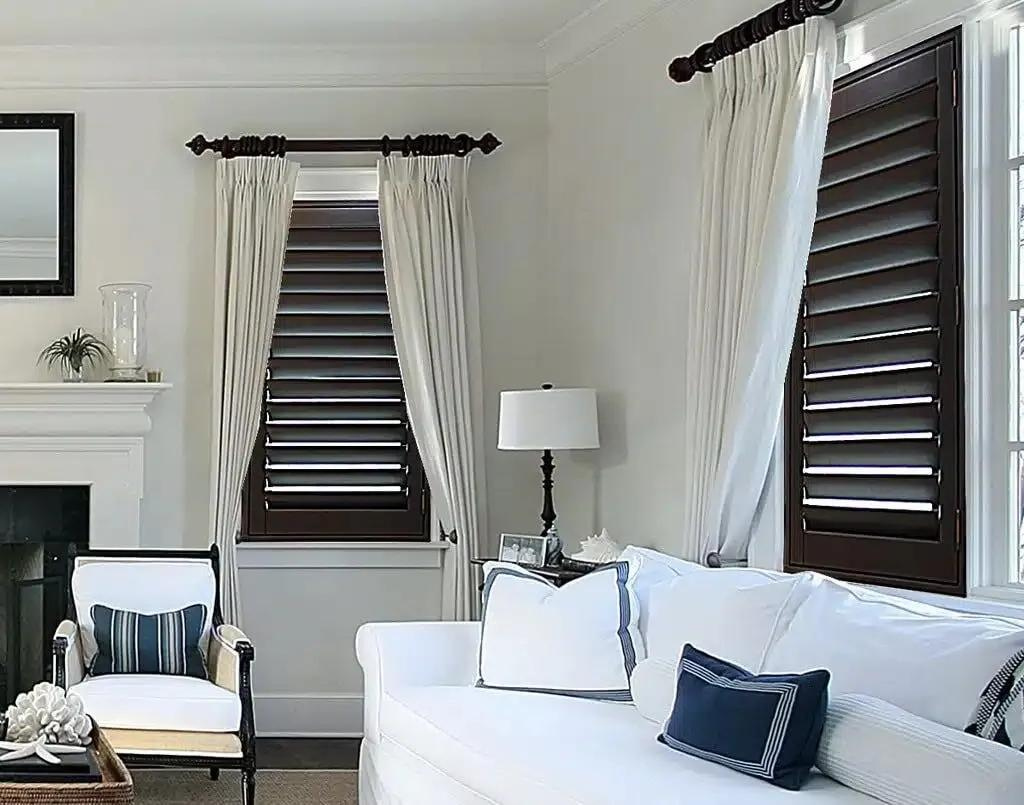
In summer it is not enough to lower the blinds. Only if you have chosen a quality one, next to a good window, you will be able to maintain a cool and pleasant temperature and avoid outside noise.
The blinds
For all the above, a trick that many of us use to keep our house cool is to lower the blinds. But this seems so easy does not have the same result in all houses: only if you have chosen a quality blind, next to a good window, you will be able to maintain a cool and pleasant temperature and avoid outside noise.
And let’s not say if we have air conditioning: spending on electricity is much lower when we have windows with shutters that insulate well and do not let outside heat enter, since the device has to work much less to get the temperature we want.
Oddly enough, the blind greatly influences the isolation that is able to provide a window. A badly designed blind can be a source of problems, both mechanical and thermal and acoustic insulation. This means that a good window with a bad blind is actually a bad window.
How to differentiate between a good and bad blind?
The main difference between a good and a bad blind is usually in the drawer where the blind is hidden. Most are an authentic drain where the temperature escapes and where we get all the heat and noise of the street. Unlike these, the quality drawers incorporate an insulating part inside them that not only prevents leaks but also helps the blind to become a barrier that reinforces the insulation of the window itself.
If you are thinking of changing the blinds, here are some keys to know if what you are selling is moderately presentable:
- Thermal transmittance: This value represents the thermal insulation. The lower it is, the more insulates the blind. It is advisable to keep below 2.
- Acoustic insulation: It tells us its ability to reduce the noise coming from outside. Ideally, it should be below 42 dB.
- Air permeability: Indicates if we get air through them. It is recommended that they be Class 4.
But the most important thing of all is not to let them get ripped off when they install a blind and demand it as long as it has good insulation. The practice of installing quality windows with shady blinds is widespread, since the installer saves a few euros and most people do not realise it until it is too late to claim. So, you can find that you have spent a paste on windows to not hear the bar below and it turns out that all the noise comes through the blind.
Here at Sure Shade you can finally enjoy top quality external cover that will help you keep your house cool and comfortable for these hotter days as well as protecting yourself of excessive UV rays.