Many of the accidents that occur in swimming pools during the summer are due to a lack of supervision, to the lack of supervision or to the different safety regulations that exist between communal and private swimming pools.
Who is not dreaming of taking the first dip of summer? If you live in a city like Madrid, you may have already had time to stop by one of the Community’s municipal swimming pools, because they have been open since mid-May. If you are waiting for the ‘little ones’ to finish the school to fully enjoy the cool water of the pool, the countdown is reduced to seven days: those that remain for the end of the current school year and officially start the summer.
Anyway, the pool in summer calls the same to older than small and is one of the most refreshing ways to beat the high temperatures, yes, always safely. Do you know what to do to avoid accidents in and out of the water?
Remember that if you want to ensure your pool is fulfilling the requirements in terms of safety, here at Pool Certify you’ll find fully accredited certifiers.
Recommendations for the little ones
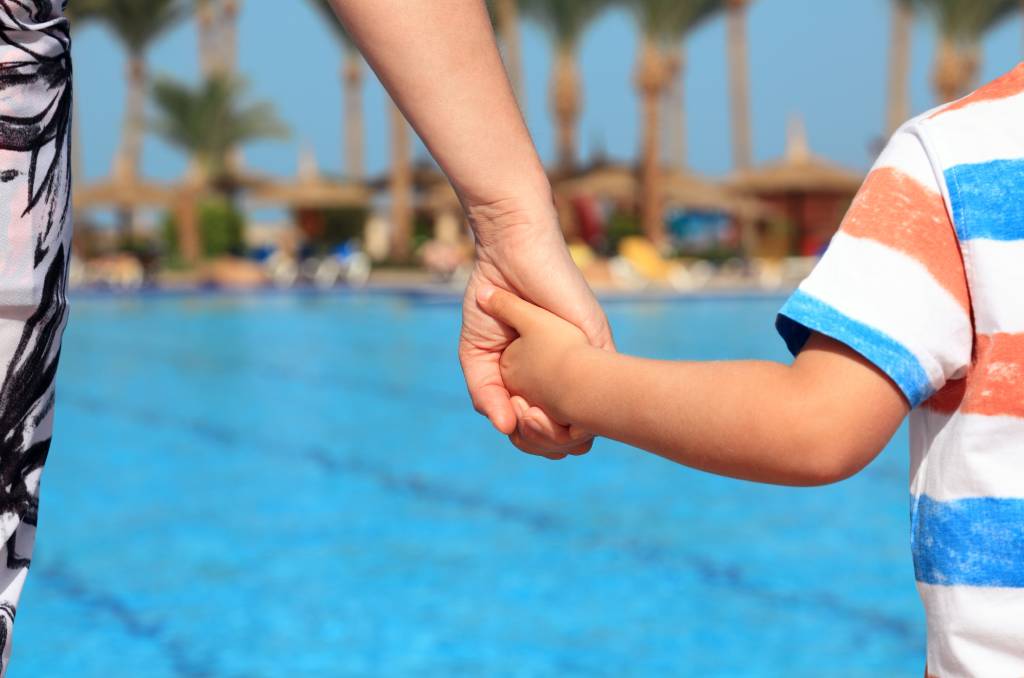
- The children always accompanied. Especially if they are playing with older friends or brothers near the pool: when the children are small, it is important to make them understand that they cannot get into the water without supervision. Always warn an older person to be with them while they swim and play in the water.
- The inflatable vest is essential and should continue to be used until they have learned to swim very well. Both in the water and while playing around the pool, especially if a protection fence is lacking. Avoid, however, the floaters to the waist and even the sleeves because, as the Red Cross warns, these can become the cause of drowning if the child turns around in the water, because the float prevents can turn around alone when placed below their point of gravity.
- They have to shower before and after getting into the pool, and slowly enter the water, especially the first time. Jumping inside can cause children to hurt themselves, especially if they do not know how to jump head first, putting their hands in front of them.
- If they are old enough to know how to dive head first, remind them to always do so from the edge of the pool and make sure they are always on the deeper side.
- The edge of the pool is just for that: to walk on it and enter the water. Avoid running, and more with bare feet and wet, avoiding the curb and the trampolines and slides.
- The water in the pool is like the floor of the house: we cannot leave toys lying around because other people can trip over them and fall or have accidents. All toys, both aquatic and those that are used outside, sitting on the towel, have to stay well-guarded when the ‘little ones’ do not play with them.
- There is nothing to protect the ‘little ones’ from the sun like teaching them what sunscreen consists of, including creams but also drinking water frequently, sunglasses or wearing a cap on the head. For younger children and those who have a very clear complexion, it is advisable to wear T-shirts and swimsuits with sun protection factor in the fabric.
- Children should not be afraid to ask for help from an older person, not even if they think they have done something wrong or that we are going to scold them, especially if, for example, another child has been harmed or is in danger. Children have to rely on those who can help them in the event of an accident, whether we are notaries, parents of other children or a lifeguard.
- Fences or pool covers are to prevent children from hurting themselves. Remember the ‘little ones’ who should never open them, even if a ball is sneaked or it is very hot and they want to take a dip without us being in front of them. These fences have to be opened always with the permission of dad or mom.
- Nothing to feel safe in the pool like learning to swim as a fish in the water, to be able to be with a specialist in infant swimming. It is the best way to have fun safely.
Recommendations for the parents
The continuous monitoring of children while they are near water is the best measure to prevent accidents: whether or not there is a lifeguard, it is always advisable to establish surveillance turns to ensure that children are constantly supervised, especially in cases where several children coincide. in the pool. The reason: you do not need very deep pools (20 cm of water are enough to cause an accident) or a long time (2 minutes are enough) for a child who is not under the supervision of an adult suffer an accident or even a drowning in the water. Accidents by drowning are no small thing, they are the second cause of death among minors over cancer or respiratory diseases; and this despite the fact that many of these accidents can often be prevented or are the result of a simple mistake.
The reason that there are so many accidents of this type is that the vast majority of drowning almost always occurs in private pools, many of which do not meet the requirements necessary to ensure the safety of children, and where many times it is not there is a lifeguard (in the community pools, depends on the number of neighbours and not on children), nor fences that guarantee that no child can access the water without control.
Contact us here at Pool Certify and we’ll be happy to assist you and answer any questions you may have regarding the services we offer for certifications.