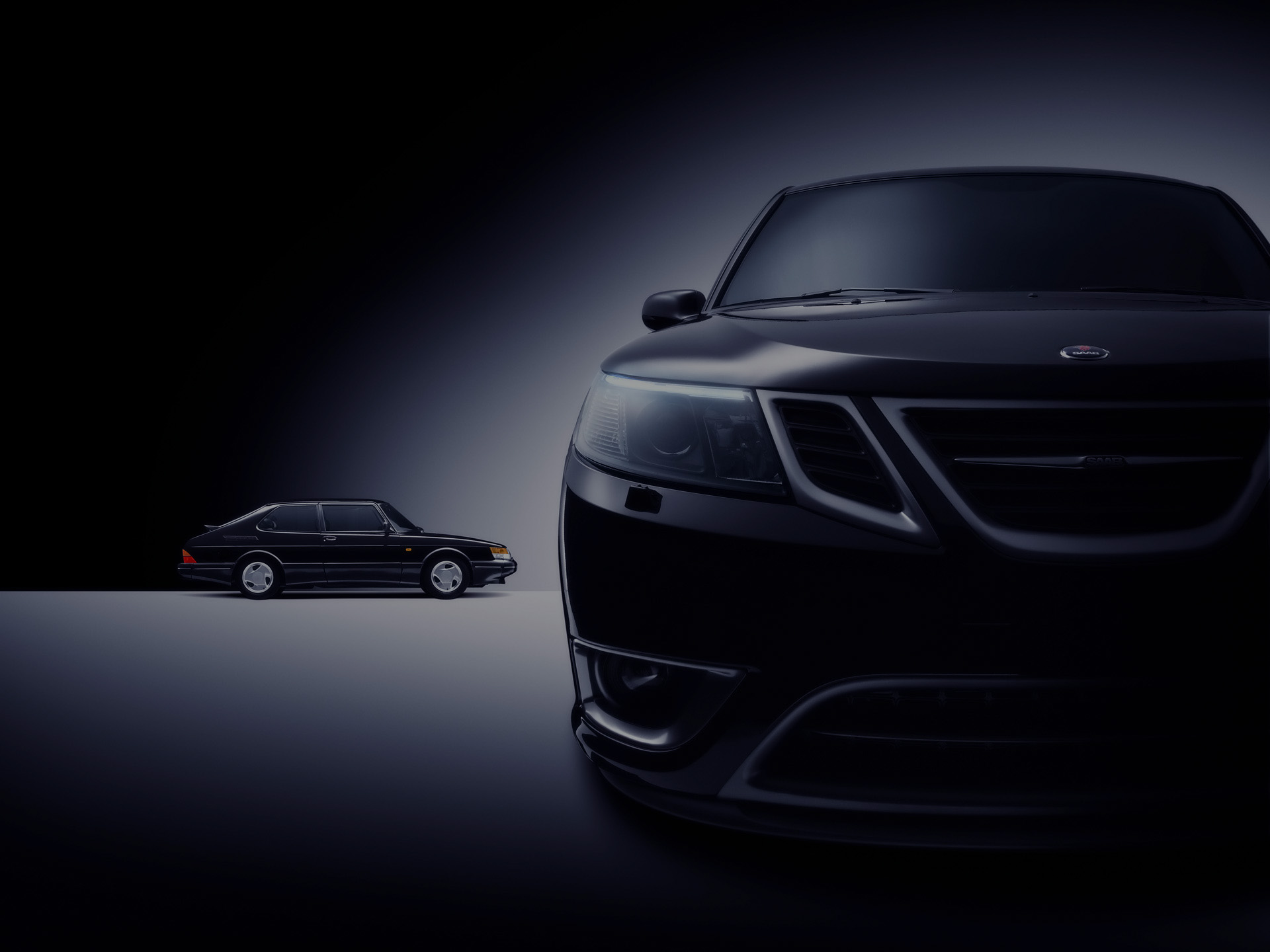
In the beginning of the 70’s a new automotive division is created to coordinate all vehicle operations within the Group, with headquarters in Södertälje, which required the transfer of all the staff working in Linköping. The engineering and production work (with the exception of the transmission shafts) is kept at Trollhättan. Work is underway to develop a new two-liter engine for the Saab 99 range, which will be built in a new engine plant in Södertälje.
The Saab-Valmet plant starts operations in Uusikaupunki (Finland). This joint venture, managed 50% by Saab, is established for the assembly by CKD system of Saab cars for both the Finnish market and for export.
In 1970 the Sonett III is presented, with a modern design. The headlamps for the 1971 model range are also incorporated. In February 1970, the 500,000 cars produced since the start of operations in 1949 were surpassed.
In 1971, the Saab 99 incorporates fuel injection with electronic control and the brand’s first automatic gearbox. In 1972, the Saab 99 is chosen Car of the Year in Sweden.
In 1975 the Saab 99 debuts in rallies. The Saab EMS with an experimental engine of 16 valves and 220 HP is imposed in the Rally Boucles de Spa (Belgium), piloted by Stig Blomqvist.
In August of 1976 Saab presents to the press the innovative turbo system. A special series of 100 cars is produced for press tests to provoke the highest level of information. The emission control system is introduced with a three-way catalyst and a Lambda probe.
The Saab 99 Turbo was exhibited at the Frankfurt International Motor Show in 1977. It began to be sold immediately, in three and five-door versions. It is easily recognisable by its “Inca” alloy wheels and the rear spoiler. The enormous attention provided by the press and its immediate market success further increased Saab’s brand image. The Saab Turbo immediately became a “cult car”.
In 1979, work began on project X-29 (code number for model 9000) in collaboration with Lancia and later with Fiat. In January of 1980 the production of the Saab 96 stopped (the 95 had stopped being manufactured in February of 1978).
The 80’s: essential for Saab
In 1982, asbestos-free brakes appeared: Saab is the first manufacturer in the world to apply this new development in its series cars (1983 model range).
At the 1983 Frankfurt Motor Show, Saab presented the design exercise of the Saab 900 Convertible. In 1984 the Saab 900 Aero incorporates the first engine with four valves per cylinder technology. This new technological concept had been presented for the first time the previous year at the Geneva Motor Show.
In May the Saab 9000 is presented to the press. This is the third absolutely new model in the history of Saab. It is designed as a four-door saloon with the functionality provided by the tailgate. Its large interior space is worth the “rating” EPA of great saloon in the US, which allows it to compete with models Cadillac, Lincoln, etc.
In 1985 Saab presents the revolutionary Saab Direct Injection system at the Stockholm Show. The Saab DI System is an advanced engine management concept with a single cylinder head and a coil mounted on each spark plug (therefore without a distributor or other moving components).
In 1987 the unit number 2,000,000 leaves the assembly line. The Saab 9000 becomes the first front-wheel drive vehicle to incorporate ABS. In 1989, the new Malmö plant was inaugurated, incorporating parallel assembly. All the components have a marked code to facilitate the subsequent recycling. A motor with a smooth pressure turbo starts to be mounted on the 900 models (1990 range).
During the 90’s:
In 1992, the Saab 9000 starts using the Saab Trionic System with a 32-bit microprocessor for engine management. September: Keith O. Butler-Wheelhouse becomes President and CEO of Saab Automobile.
In 1993 the new Saab 900 generation in Trollhättan is presented. For the first time a Saab model is replaced by a completely new version in the same market segment. The design gets excellent reception and the highest ratings for the safety elements, the 2.0-liter turbo engine and the Saab Sensonic automatic transmission. It is the first Saab to offer the option of a V6 engine as a complement to the traditional four-cylinder mechanics. More than 30,000 people huddle in the central square of Trollhättan to have a privileged view of the moment when the new Saab 900 is unveiled.
At the 1994 International Motor Show in Detroit, the Saab 900 3-door Coupe and the 900 Cabriolet were exhibited to the public. Six standard Saab 900 models set 40 new international speed records for distances of up to 25 miles, with one hundred journalists participating in Talladega’s “Superspeedway”.
In 1997 Saab celebrates its 50th anniversary as an automobile manufacturer. The Saab Museum, restored and expanded, is the nerve centre of the festivities. The Saab 9-5 is presented in Trollhättan during the summer. It is shown to the public for the first time outside the Saab Museum, and more than 25,000 people come to see it.
The Saab 9-5 Station Wagon, the first Saab family car in thirty years, is presented to the press in Barcelona. The Saab 9-3 Viggen, high performance version of the model, is exhibited for the first time in the New York Hall at the end of March 1999. A month later it is officially presented to the press for its road test in Monte Carlo.
Saab started expanding to other areas
The new Saab paint shop starts working at full capacity in the spring. The Saab 9-5 Aero is exhibited for the first time at the Frankfurt Motor Show. In 2000, General Motors and Investor reached an agreement to transfer the total ownership of Saab Automobile to the GM Group.
In Geneva, the concept of the variable compression Saab (SVC) engine is revealed. It allows a drastic reduction in consumption, without affecting benefits.
If you have a Saab car and you are looking to give it the maintenance it deserves, here at JB Prestige automotive service you will find a team of qualified professionals for the task.