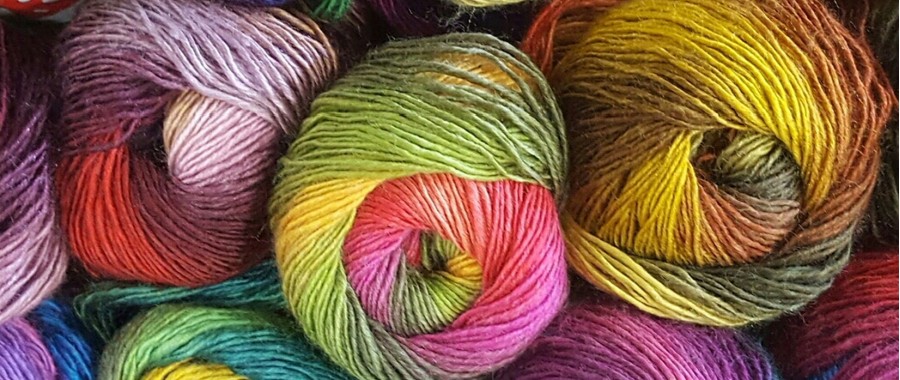
If there is a fabric that is booming, that is merino wool. The reason is because it is a fabric that works for any sport related to the mountain, in which the climatic conditions, cold and heat, are a key factor.
There are other types of sports such as cycling or even running that also include this fabric because it has many positive characteristics. If you have not yet tried it, it is highly recommended that you do so.
Find top quality wool and more for your creations here at Yarns on Collie. If you need more information to get started in the world of knitting you can contact us and we’ll be happy to help you. Contact us today for more information about our products.
Where does the merino wool come from?
This wool is obtained basically from sheep, but also from other animals such as llamas or goats. In the same way that there are breeds of cats or dogs, they also exist in sheep and, the one that is responsible for producing this type of fabric, is the merino breed, of Australian origin and, sometimes, comes from New Zealand or, even, in South American countries.
What is the difference with the normal wool?
The wool of merino sheep differs from the normal in the thickness of the fibre and in its yield. Merino wool is much finer and its yield reaches 80% in some cases.
There are different reasons to choose merino wool:
- Helps maintain the temperature of our body in very cold weather conditions and be composed of a very fine tissue.
- Its resistance, elasticity and flexibility make this wool an ideal complement for sports where you need great freedom of movement and high resistance, as is the case of climbing.
- Oddly enough, it is also ideal for high temperatures because it is hygroscopic, or what is the same, which is able to absorb moisture and work very well in dry climates. In cases of relative humidity and temperatures, the wool remains wet, so it is not ideal in these cases.
- Resistance to microorganisms, such as bacteria responsible for bad odour, so it resists much longer to the bad smell and, when dry, can be ventilated to give more than one use before washing the garment. It is important to keep it in dry places.
- As wool grows from the hair of merino sheep, it is a renewable raw material.
Why wool coats, gives heat and is good insulation?
The wool gives heat, shelters and is a good insulator due to the chemical and physical properties of this natural fibre. When we feel cold we are used to protect our body with winter clothes, we think that we avoid that low temperatures enter our body, but… Is that really what happens when we catch cold?
The human body regulates its own temperature, so that when it is hot we begin to sweat to maintain the body temperature of 36.5 ºC and not to go higher. The same thing happens when it’s cold, the body starts shivering to activate the movement, get warm and the temperature does not fall below that 36.5ºC.
That is to say, the warm clothes that we wear in winter serve to avoid the loss of body heat, in the same way that in summer we bathe in pools or shower with cold water, making the body does not overheat. This is a role that wool interprets perfectly thanks to its properties.
Wool properties
This property is given by the structure of the fibre, wavy and curled, so that these curls allow the creation of a layer or air chamber between fibres. This air circulates inside serving as a thermal regulator. These characteristics make it serve both to avoid the loss of heat in situations of external cold and to maintain mild temperatures when it is hot outside.
Hygroscopicity
It refers to the ability of wool to absorb or release moisture to the environment in which it is located. In humid conditions, the moisture itself is absorbed by the wool, to then transfer it to dry places.
Elasticity
The wool fibres are stretched easily, requiring a lot of effort to reach the break. It is one of the secrets to be able to obtain fine threads of soft wool.
Non-flammable
The wool does not burn. It takes a long time to burn and needs a source of heat, fire, very powerful to burn. It ends up burning but does not ignite and the flame always tends to dissipate. About this property you can read another article in this blog about how to put out a fire with a blanket.
Texture Feeling
We can say that it is the ability to pack fibres with others until a compact fabric is obtained. It is the fulling with which thickness and durability is achieved in blankets and wool articles. You can see here a video of an active fulling bar.
It repels water
Repels water, always within certain limits. The responsible one is Lanolin, a hydrophobic molecule that is part of the chemical composition of this fibre. Due to this molecule the sheep do not get wet! Wet your wool but not your skin. This property makes a wool garment have some capacity even to repel surface stains, as well as ease to later clean them.
Other curious properties
Other properties less known but also curious are its bactericidal capacity, repels to some extent the presence of bacteria, its chemical composition makes it biodegradable, renewable, every year is shearing a new fleece in a natural, sustainable and friendly, friendly way.
Here at Yarns on Collie you’ll find second to none wool that absorbs and releases moisture to cool or warm the body. It will feel hot quickly, but not overheated, thanks to the exceptional properties of fabric transpiration. Synthetic fibres such as polypropylene or polyester do not have this ability to transpire, absorb or release moisture.