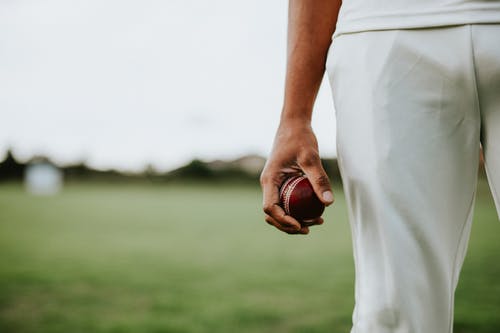
Cricket is a bat and ball sport, in which two teams of eleven players each face. It is played on a grass field, more or less oval, whose length should not be less than that of a football one. In the center of the field there is a rectangular terrain that is known as pitch.
Cricket requires a unique combination of physical attributes that may be necessary in many different situations. Due to the different requirements for each position in the field and the extensive periods of play, it is essential to have a solid nutritional strategy to maintain concentration and energy throughout the match.
Here at Clearance Cricket Store you will find all the equipment needed to practice this beautiful sport. Contact us today for more information.
Training
The training covers all aspects related to fitness, such as strength, endurance and agility, so players must train hard, rest well and eat balanced. Without this combination of aspects, the recovery time after each game or training session will be longer and players may not be ready for the next game. When playing a game, all players must be able to react quickly and recover effectively between moments of intense and explosive activity.
Professional cricket players follow a training program throughout the offseason. This includes bodybuilding sessions and aerobic work such as running or swimming.
Competition
The Cricket World Cup is the most important selections tournament of this sport. It has been held every 4 years since 1975 and the Australian team has won the most times.
Physical characteristics of the players – Body composition
Although cricket involves a large number of areas of specialization, there are certain common physical attributes that are necessary in all players. The most obvious of all is the ability to stay focused and energized for several hours until the end of the game. The player may not have to go into action for a while but, when he does, he needs to make sure he lives up to the situation. Another of the physical characteristics of Cricket players is the ability to perform explosive movements repeatedly, such as sprinting, throwing and throwing yourself through the ball. In general terms, the player must be agile, have a fibrous body and a high level of resistance.
Players often encounter increased body fat due to excessive caloric and alcohol consumption.
In order to carry out a food plan of descent, it is necessary to evaluate the training load and include additional aerobic activity. Long-term changes must be made by planning and controlling food intake.
Problems associated with nutrition
During Workouts
Elite cricketers usually have an extensive training schedule with several sessions throughout the day. The intensity of the sessions may vary.
They need to eat a varied diet based on food sources of carbohydrates (whole grain breads and cereals, fruits, vegetables, dairy products), including lean protein sources (skinless chicken, lean meat, low-fat dairy products, legumes, fish, eggs) and good quality fats (vegetable oils, nuts, avocado).
Food intake should be very timely to help with recovery between sessions. A good strategy is to incorporate collations such as:
- Sandwiches
- Yogurt with cereals
- Cereals or muesli
- Bars or gels
- Fresh or dried fruit, mixed fruits and nuts
- Sport drinks
Pre-Match Nutrition
Players do not know if they will play until approximately 45 minutes before the start time. Therefore, they have to prepare for a match assuming they will be involved from the beginning.
Ideally, players should eat 2-4 hours before the game begins and include snacks such as fruits, cereal bars, yogurt and sandwiches every 1-3 hours while waiting to bat.
Proper hydration prior to the event is of vital importance.
Nutrition during the match
To achieve a good performance, a carbohydrate-based meal is ideally required, which includes some good quality protein, vitamins, minerals and small amounts of fat. Good options include cereals, yogurt, sandwiches, pasta and fruit.
Depending on the level of competition, meals can be provided by clubs or players carry individual food.
To avoid eating foods high in fat, such as sausages, fried foods and pastries it is important to plan ahead what to bring and how to keep it.
In important competitions, hydration is generally contemplated, generating spaces for drinking, however in some lower levels of cricket this is less frequent.
Nutrition after the match: recovery
Due to the long duration and the tension of a cricket match, it is essential to have a solid recovery program. After several hours of physical activity, the body will run out of energy reserves, so it will be vital, from the point of view of recovery and physical adaptation, to be able to recover those energy levels. Replenishing body reserves of carbohydrates and proteins should be a priority in these cases.
Alcohol consumption
Historically, alcohol consumption has been strongly associated with the cricketer’s lifestyle. Alcohol increases the loss of urinary fluids and can interfere with the recovery of the body’s carbohydrate stores and worsen any soft tissue injury. It should definitely be avoided 24 hours before the game, and it will only make recovery difficult during a match of 4 or 5 days.
How to improve Cricket through batting exercises
A batter can improve technique by practicing against various bowling actions. A fast bowler will attempt to beat the bat with rhythm, where as a ball spinner tries to use the resulting ball and bounce flight to hit the wickets and finish the batman innings. Selection of grip, posture and practice shot will help a batter achieve a successful entry. Left-handed and right-handed batters use the same scoring shots. An expert, high score batsman can greatly increase the probability of winning the match.
- Grab the handle of the bat with both hands. Left hand of a right-hander should be on the top of the stick and vice versa for a left-hander.
- Check that both hands are together at the top of the bat handle. The thumb and forefinger of the bottom hand forms a V on the back of the bat and the face away from the body. The upper part rests on the thigh of the leading leg.
- Step sideways towards the bowler. Place the feet apart a comfortable distance and take the weight of the body on the balls of the feet. Bend your knees slightly so that the weight of the body can be transferred to any foot depending on the tone of the ball.
- Keep the stick vertical with the body and swinging to familiarize yourself with the movement of the foot and the weight of the bat. Make sure protective clothing is worn before receiving the bowler’s ball. Once you’re sure, indicate the bowler to start the bowling ball in the wickets.
- In front of the wickets but not so close that the bat will hit them with the swing back. Raise the stick with the swing back as the bowler approaches.
- Step in the shot and meet the ball with swing forward cast. Lower the front shoulder and keep your head as still possible. Ideally, the ball is necessary, as it passes between the feet.
- Select which shot to play as the bowler varies pace and pitch of the ball. The shot can be played while the body weight is in the front foot or the back foot. Practice these photos before more advanced techniques.
Clearance Cricket Store is a Melbourne based online store where you can get everything you need to start practicing cricket! Visit our store!