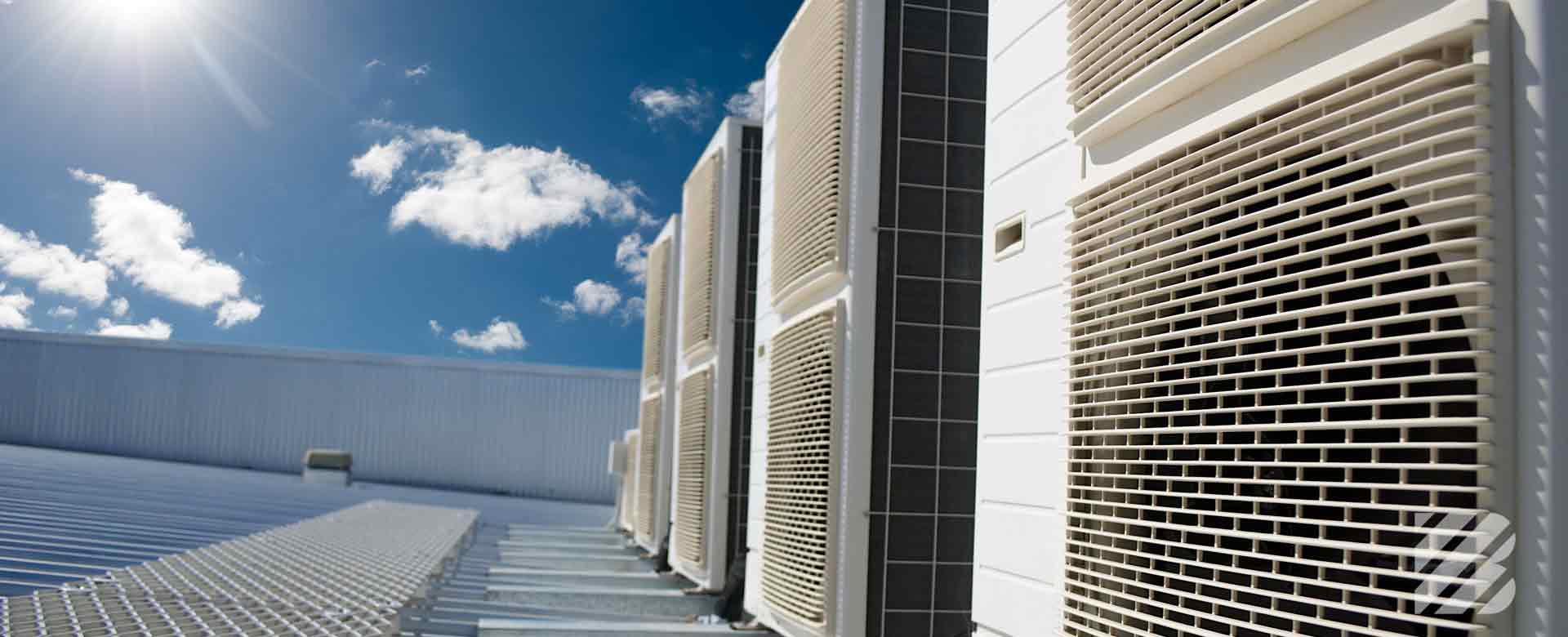
We review some techniques that today are used in sustainable data centres to save energy and cool servers in an optimal way.
If we access a data centre today, the temperature that we will find is much lower than in any other room of any facility and the environment is controlled to ensure optimum environmental conditions for the functioning of the servers that are hosted there.
When one enters a data centre for the first time, cold and noise are, perhaps, two of the aspects that attract the most attention; two factors that are related to each other because much of the noise is produced by the ventilation systems of the servers. Like a smartphone or a personal computer, a server is heated when it is in operation and the greater its activity or load, the power consumed will increase and also the energy dissipated in the form of heat.
If we do not refrigerate the servers and only depend on their systems of injection and extraction of air, these would end up breaking down and, surely, some other component would be burned by the heat produced. Therefore, as we can imagine, ensuring the optimal operating conditions of a server is a critical task that requires large investments in cooling systems and that, over time, has evolved a lot and has opened the doors of a new generation of sustainable data centres.
Cold corridors and hot corridors
Although it is a very simplistic description, when we enter a data centre we can see corridors with racks that contain servers and other corridors formed by the backs of these cabinets. In the corridors that are formed with the front of these cabinets, it is normally cold since the cold air enters the servers by their front part and, therefore, the corridors formed by the back part of the cabinets are hot (because that’s the way the hoy air leaves the servers).
The control of cold corridors is fundamental to guarantee that our data centre works properly and the task is much more complex than just injecting cold air and extracting hot air. We are facing a challenge and a big engineering problem because, in the current environment, it is essential to minimise operating costs and, as we can imagine, maintaining the environmental conditions of a data centre has a great weight within the operational costs from any data centre.
To give us an idea of what we are talking about, 2% of the carbon dioxide emissions generated worldwide are linked to the technology sector, a sector that is capable of consuming about 1% of the global electric power. With this context, and taking into account that our computing needs increase exponentially, it is necessary to look for alternative sources of energy (betting on renewable energies) and optimise cooling by betting on much more innovative solutions than conventional air systems.
Beyond air conditioning
The search for efficiency and energy saving has opened many lines of research that aim to make the data centres much greener and, above all, sustainable. Efficient air conditioning systems have been developed in order to be capable of saving around 90% of the electrical energy necessary for their operation: a substantial saving that would reduce carbon footprint of the technology industry and, therefore, of cloud computing.
The architecture of data centres is another line of work that many companies in the sector have followed to make their data centres much more efficient. One of the best-known examples is Yahoo! and its “chicken coops”, an architecture that the company has adopted in its data centres in New York and Switzerland and that, according to the company, allowed them to save around 40% of energy and allocate only 1% of the total energy consumed to the air conditioning.
Water and oil
In addition to the development of new air systems or the changes in the architecture of the buildings to optimise the air conditioning needs, nowadays other ways are being explored to obtain the optimum environment in data centres.
Water cooling is one of the most popular systems among companies in the technology sector. Water is used today as a cooling system inside the servers, systems that to a certain extent can remind us of the radiator of a car and are used, for example, to cool supercomputers. Water cooling is also used as a substitute, or as a complement, for air cooling of a data centre.
Water is not the only fluid used today in the cooling of servers and, although it may sound strange, the use of mineral oils is also becoming very popular in this new generation of sustainable data centres.
Imagine a server without chassis and without fans that, literally, we submerge in an oil bath that serves to cool its components. This type of systems allows a reduction of 90% or 95% of the energy used for cooling the servers and, by eliminating mechanical ventilation, you can save around 10% or 20% of the server’s energy consumption.
Heat reuse
While we have focused on the optimisation of the cooling systems of data centres, the heat generated can also be exploited. Yes, the heat dissipated by the servers can be used and reinvested in applications that can save us energy. The simplest and closest thing is to use the heat in heating systems or to heat water in the same facilities in which the data centre is located, but this heat can also be extended to other users.
In the same way that in Vienna the incineration of garbage is used for the heating system of many buildings in the city (and also for the client water supply), the heat dissipated in some data centres can be reused to cause energy savings in third parties and make these sustainable data centres able to exert their influence beyond their own physical facilities.
If you want to ensure your cooling system is working properly for your servers, and it receives proper maintenance here at Blue Innovations we can offer you assistance.