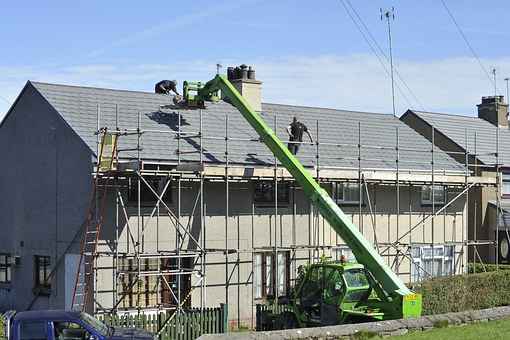
Given the deep economic crisis suffered worldwide in recent years, it is quite common for management departures opt for the rehabilitation of structures instead of the construction of new works. Sometimes, it can be the best way to save a lot of money since many structures have a lot of potential yet to be exploited. It is also a great option if you just prefer your current facilities and think they are the best place for your business to operate.
On this article we will explain 5 techniques that engineers can take into account when reinforcing a beam.
In the years prior to the aforementioned economic crisis, there was a global boom in the construction of housing and infrastructure that has led to a rich range of structures to be recovered, strengthening the infrastructure. In the process of recovery, and taking into account what was mentioned before, it is expected that investments in rehabilitation and maintenance processes will keep growing exponentially.
Along with the pillars or piles, the beams are the most used structural elements in construction and public works, not being exempt from suffering their own pathologies almost always related to an excess of bending, so in many cases they have to be reinforced and repaired.
We tell you then the best 5 ways to reinforce a beam, something that every engineer should know.
Improve the dimensions of this section
If physically possible (you have to take into space limitations and weight as well), the increase of the section seems an immediate and obvious solution that can solve a problem caused by the insufficient amount of steel calculated in the project or commissioning.
Advantages:
• It allows to add reinforcement to bending.
• Low cost.
Disadvantages:
• It is not space limitations can make it difficult in some cases.
• It requires the preparation of the adhesion surface and the correct welding of the new reinforcement to the existing fences.
Reinforcing using layers
It is another of the immediate solutions that will externally reinforce our element in the event that it presents problems caused by a deficit of flexural capacity. Adhered layers will function as an exoskeleton that will absorb excessive deformation that the beam cannot cope with on its own.
This technique has usually been carried out with metal layers, although in recent times, it is common to resort to carbon fibre to perform said task, with which improved results are obtained.
Advantage:
• Simplicity and speed of the operation.
Disadvantages:
• It forces to make a perfect adhesion of the reinforcement element with the beam, so that it is effective. For this, it is inevitable to resort to special epoxy resins.
Reinforcement with metallic profiles
If the two previous methods are not enough to reinforce our structural element, we will have to resort to more expensive techniques. As in the previous cases, adding new metal profiles to an existing concrete beam will require a correct adhesion so that its coupling is optimal.
In the specific case that the beam to be reinforced has a T section, we can use a metal lattice to support the wings, a technique widely used in the rehabilitation of bridges.
Advantage:
• Reinforcement of greater scope.
Disadvantages:
• Higher costs than previous alternatives.
• Correct adherence to the beam, which requires the use of special epoxy resins.
External prestress
Another very effective option is the use of prestressed external reinforcement. This is achieved by providing the beam with the necessary counter flex to combat the excess of flexion produced.
This system is the most suitable one to reinforce large bridge beams, since it is in them where the highest loads are presented.
Advantage:
• It does not need the application of adherent materials, which makes its application much more optimal.
Disadvantage:
• High cost and difficult to operate.
Changing the structural scheme
Finally, although in most situations it is not possible, the option of modifying the structural scheme is still an option. The main objective will be to reduce the bending moments acting in the area to be rehabilitated, thus achieving a lower demand in the aforementioned section.
Given the possibility of applying this method, we find 3 different ways to structurally modify the beam:
1. Through the elimination of permanent loads: materialised through the removal of upper coating if it is too much, or by eliminating any susceptible element located on the beam.
2. Reducing the number of existing lights.
3. Changing the static scheme. Designed for bridges with joints with the possibility of eliminating them, adopting a continuous board.
Advantage:
• It solves the problem in a simple way.
Disadvantages:
• It is not usually physically possible and if it is, it presents difficulties that raise its cost.
As you may have noticed after reading this article, most solutions imply a correct adherence between the reinforcement and the structural element, since the choice of the correct adhesive and its optimal placement will affect the effectiveness of the established solution.
Keep in mind that reinforcing a beam is an excellent option to save some money in building materials and labour. It is way simpler and in most cases the most suitable option from a financial stand view.
The great success of steel is based on the relative advantages they present in terms of properties such as heat conductivity and current conductivity, as well as their resistance to different efforts and perhaps one of the most influential factors in their success in terms of large gamma of uses and participation in different fields is its relatively low cost compared to materials that may have better properties or not.
Nevertheless, sometimes reinforcing a beam is not the best option, especially when the structure is no longer reliable and your best option is to look for a new place. Able Building Inspections are a ream of specialists in the inspection of buildings that have been affected over time able to assist you when looking to make the smartest choice when looking to purchase a house. We will be able to carry out a study of the state of the building you want to purchase, do not hesitate to contact us.